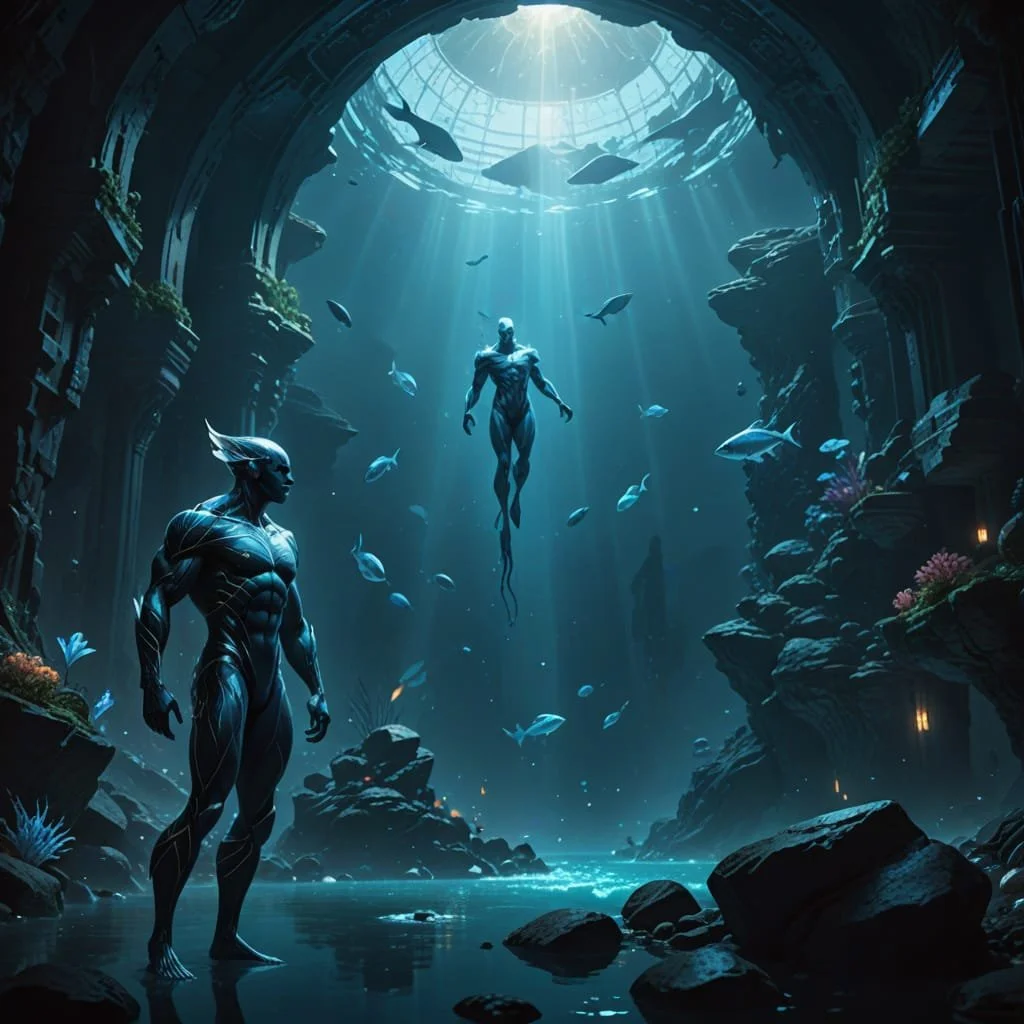
After a few months, the scientists came up with the first model to allow the gills to breathe air: a thin membrane that could be worn over the gills.
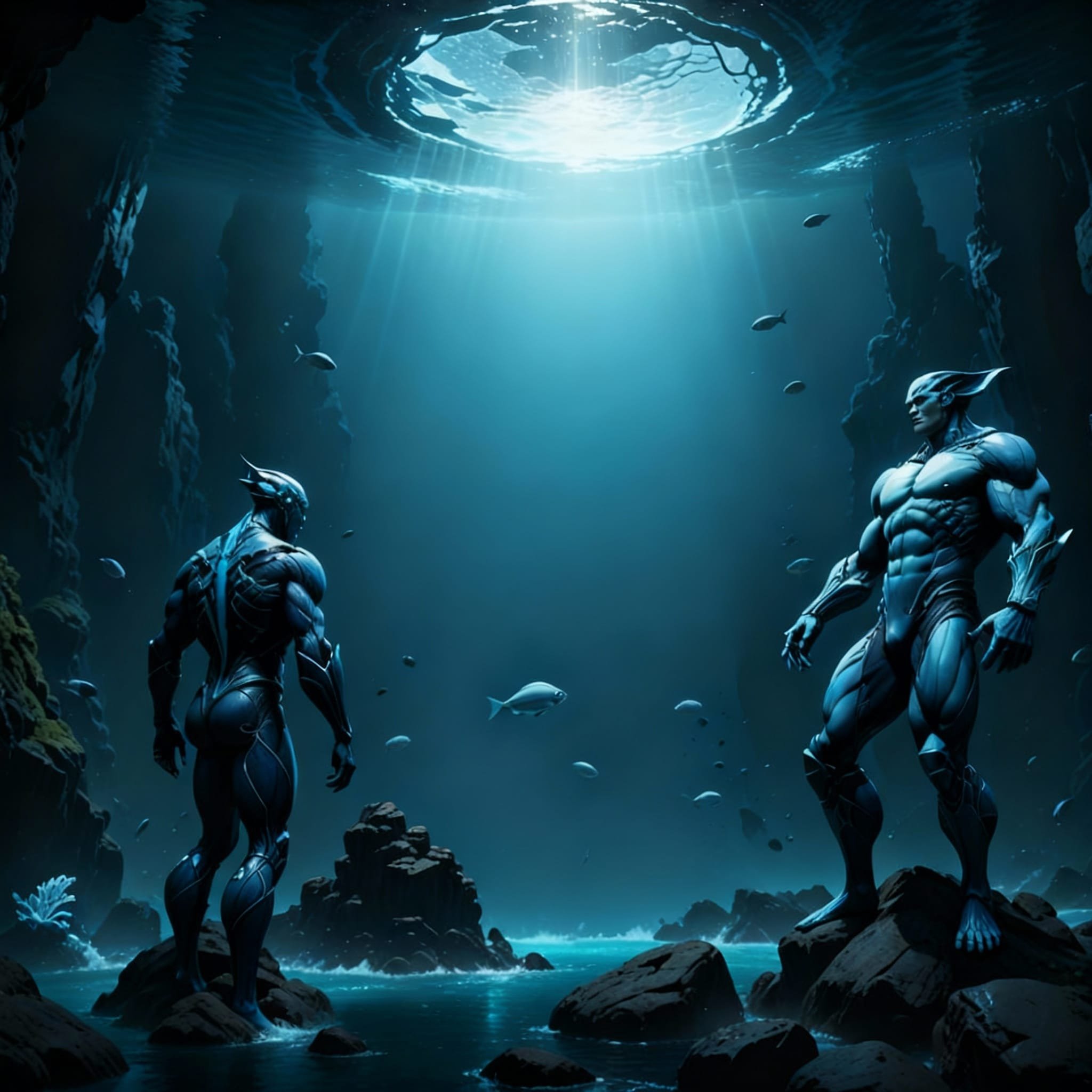
But the strategists also demanded armor. So, carbon armor was developed for the gills and weaker parts of the body. Close-fitting and super-light.
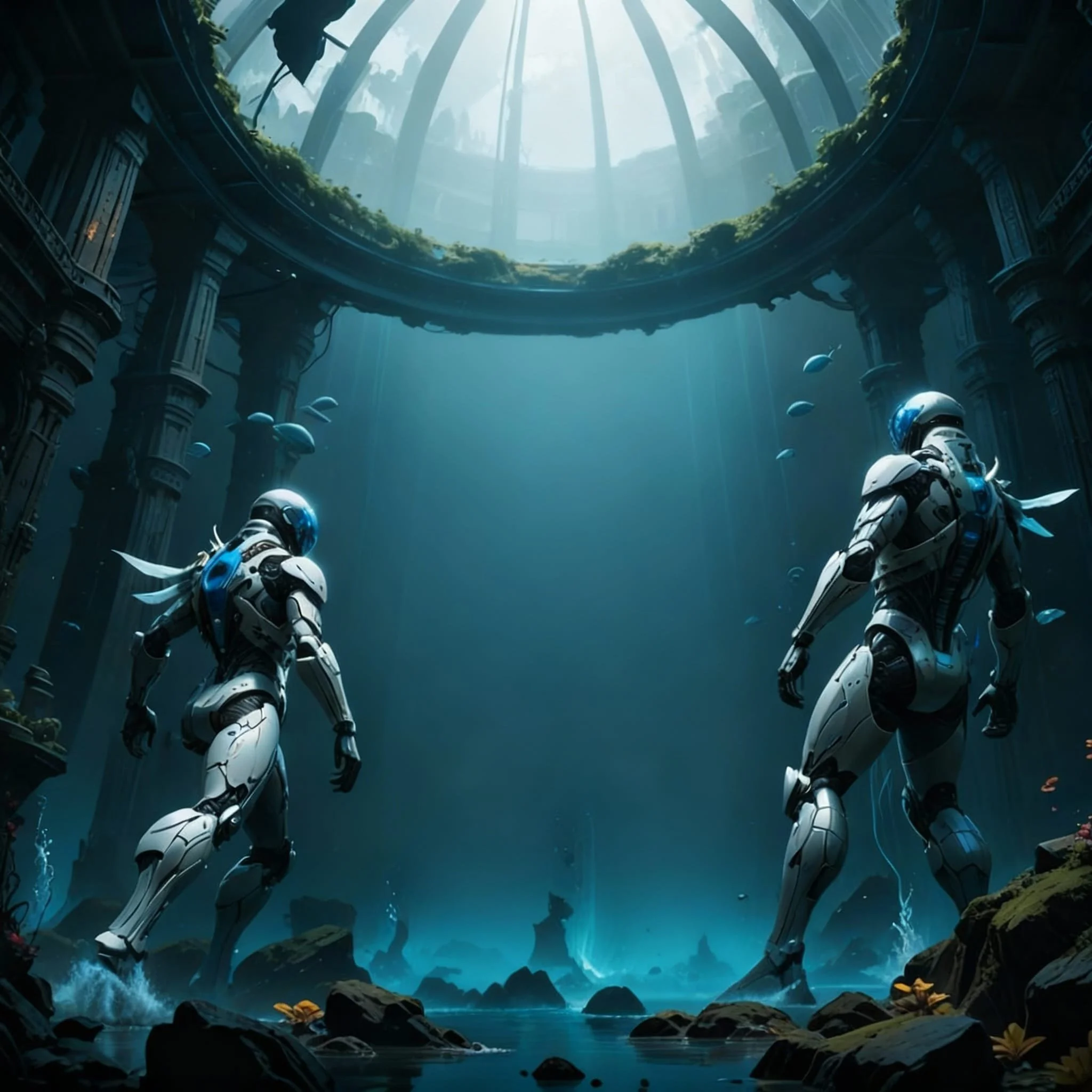
After problems with the functioning of the gills, larger gills were developed on the back, and water-filled helmets to counteract the body's suffocation reflexes.
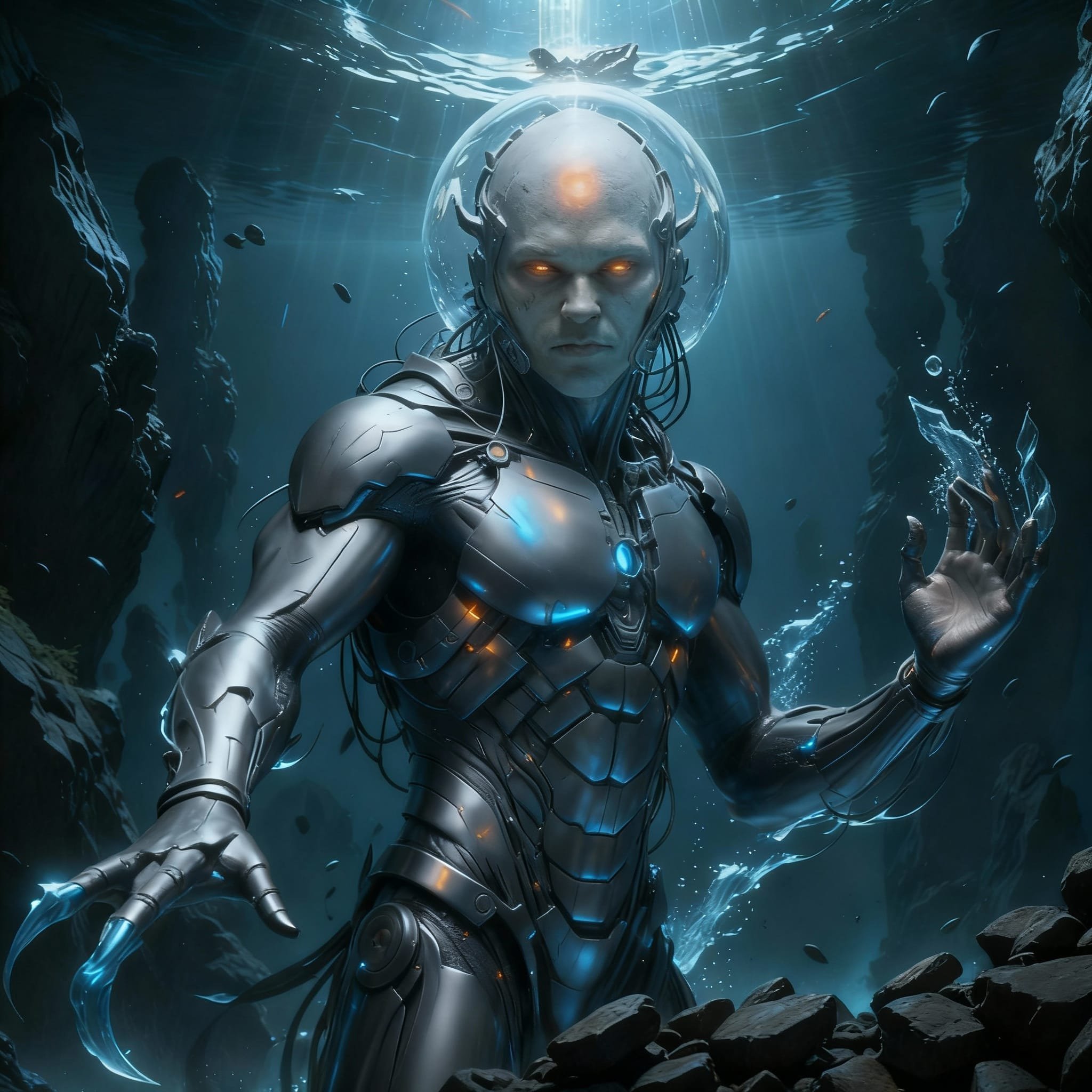
However, the gills on the back met with resistance from the strategists, as they were too vulnerable in hand-to-hand combat. So, the gills were moved to the helmets. But that too met with resistance...the helmets were also far too vulnerable.
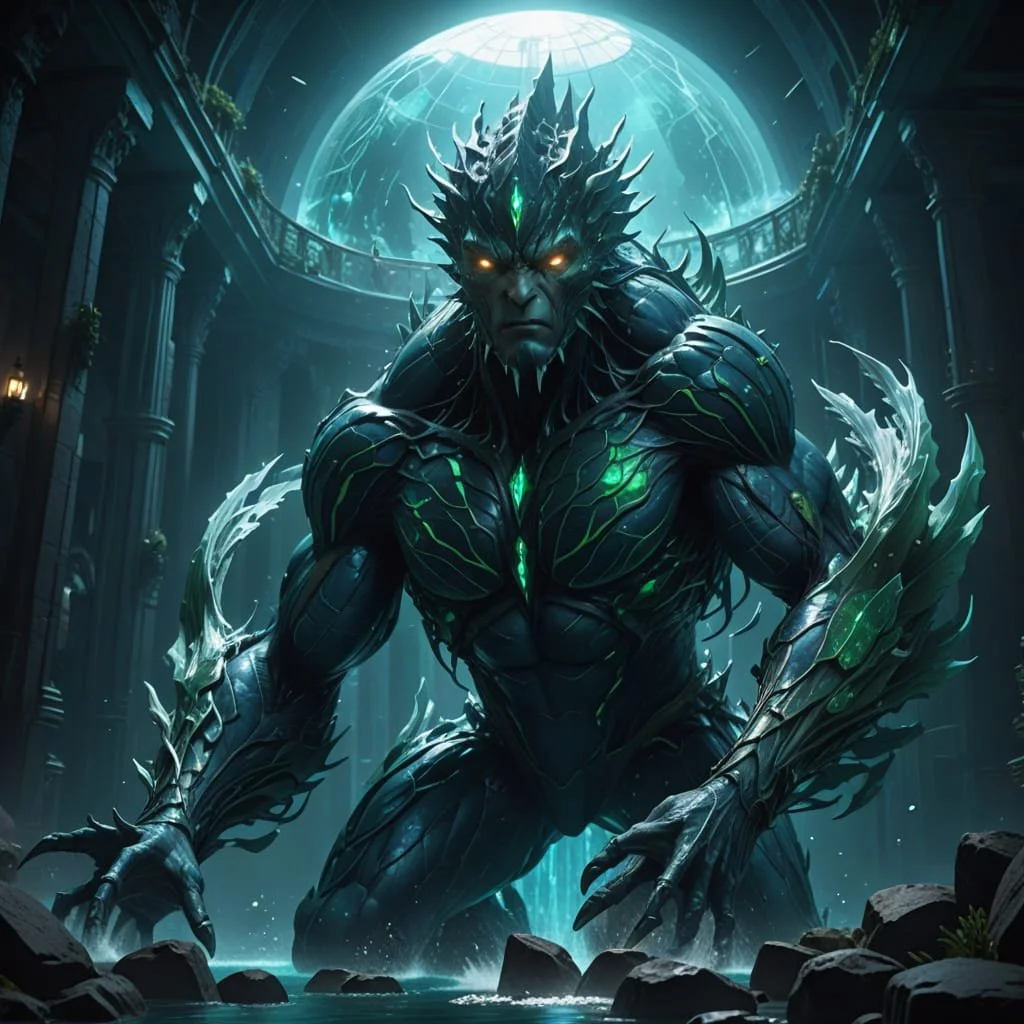
Six months later, the gill concept was abandoned. "Why was it necessary for mermen to be physically present on land?" was the question. "Why don't we use mechanical men?"
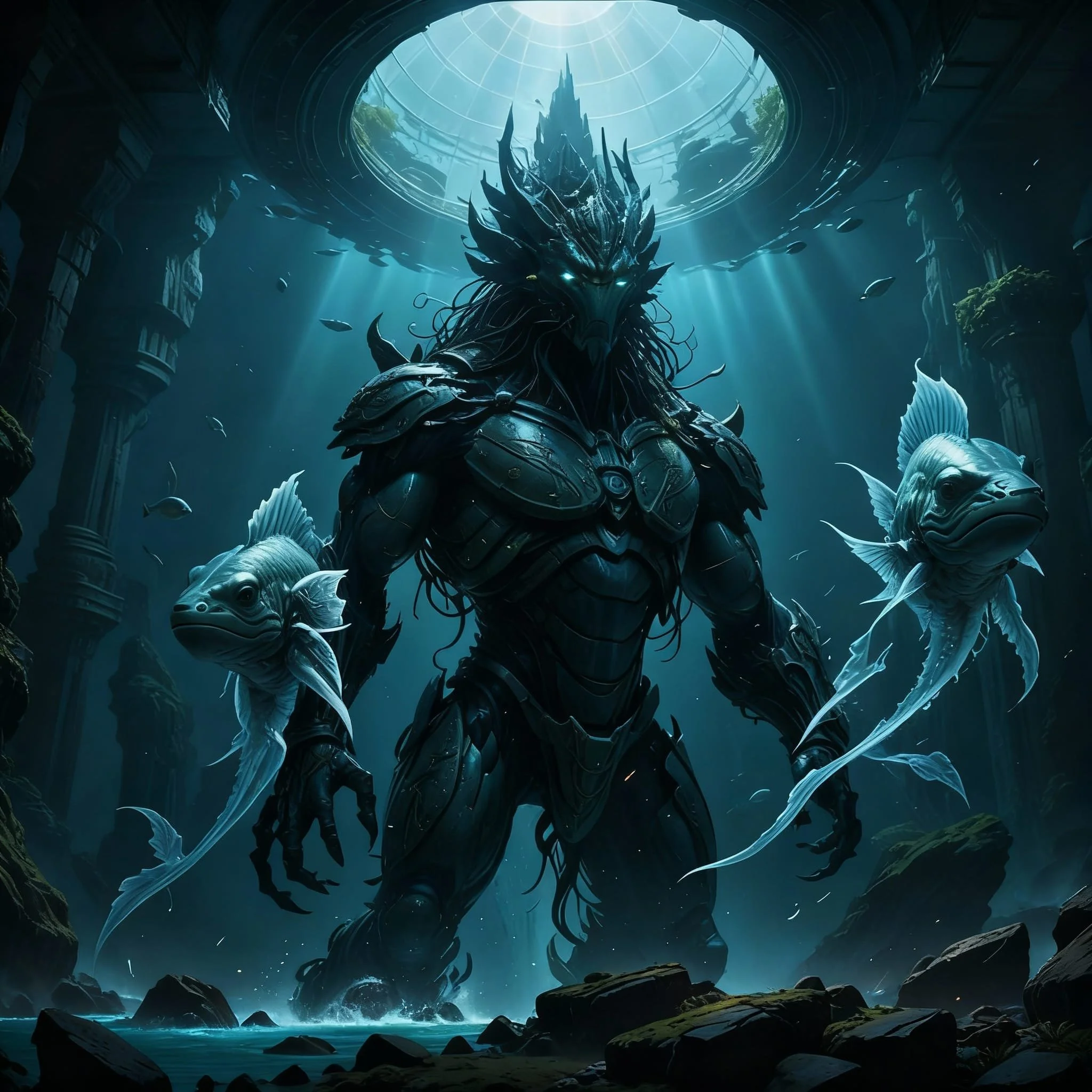
The proposal was received positively—after lengthy discussions—and the first models looked intimidating, were brutal in their movements, and stupid in their actions. And above all: they needed to be controlled.
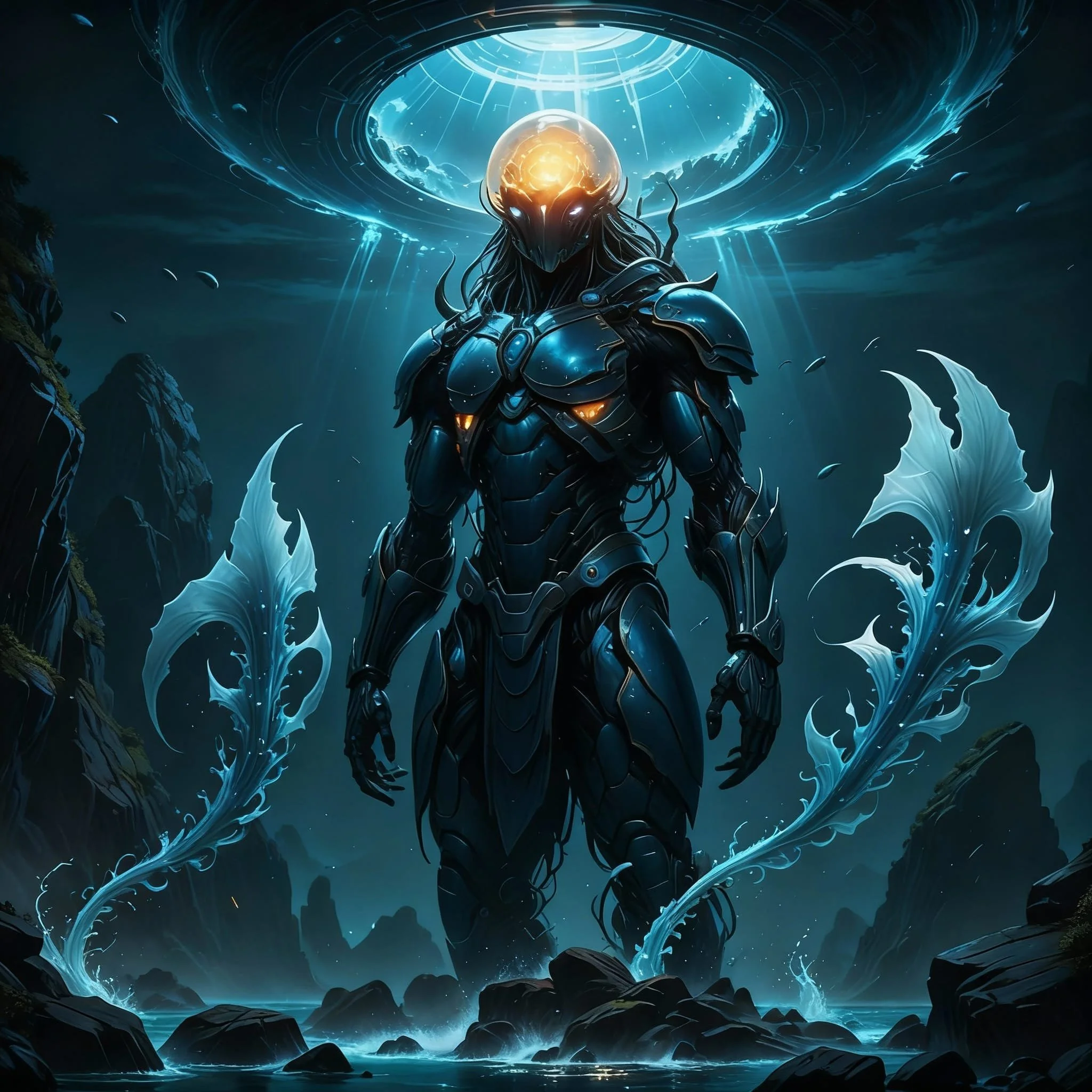
So, after several more months of discussion and experimentation, the idea of artificial intelligence was proposed. The first model was very fragile, with its artificial brain clearly visible and, once again, protected only by glass.
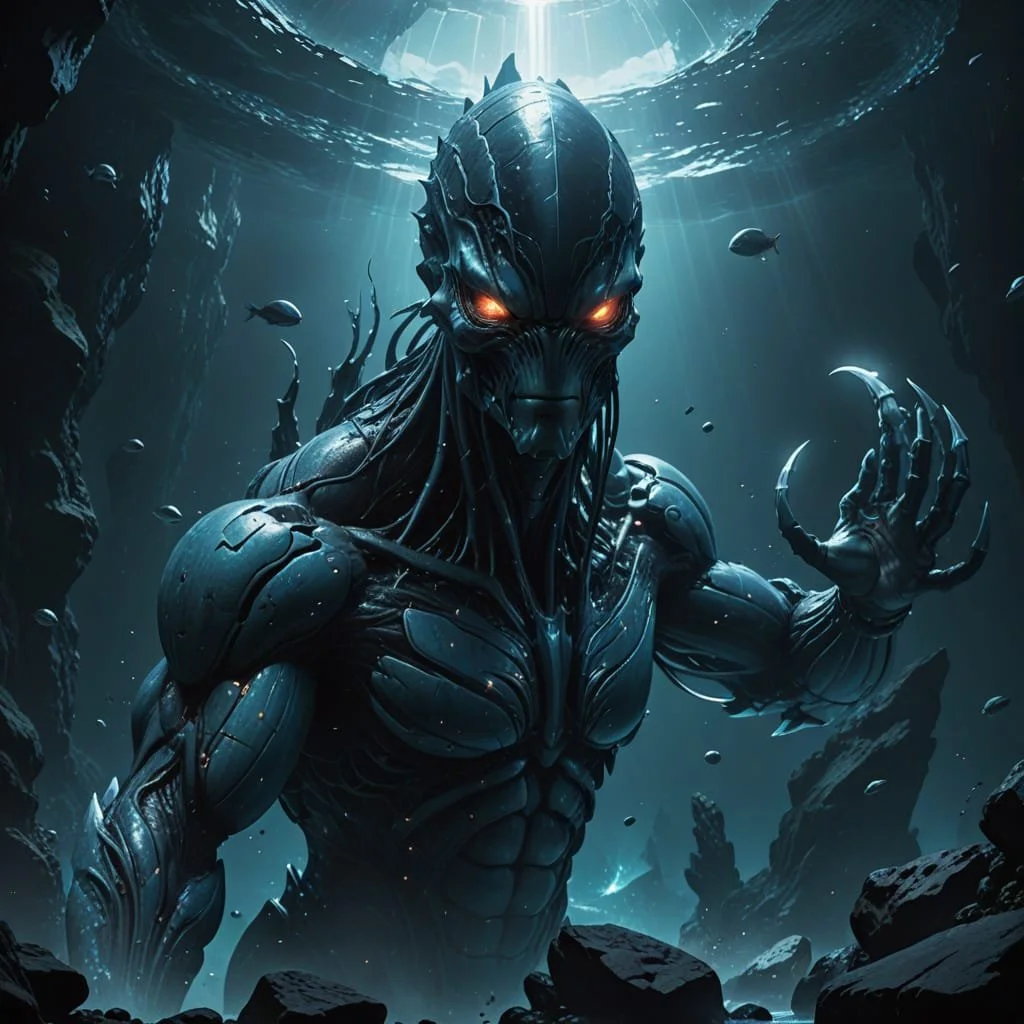
The next model was a significant improvement, but still looked too intimidating. A certain group of scientists felt that the robots, as they were called, should also be able to negotiate when circumstances permitted, rather than just be efficient killers.
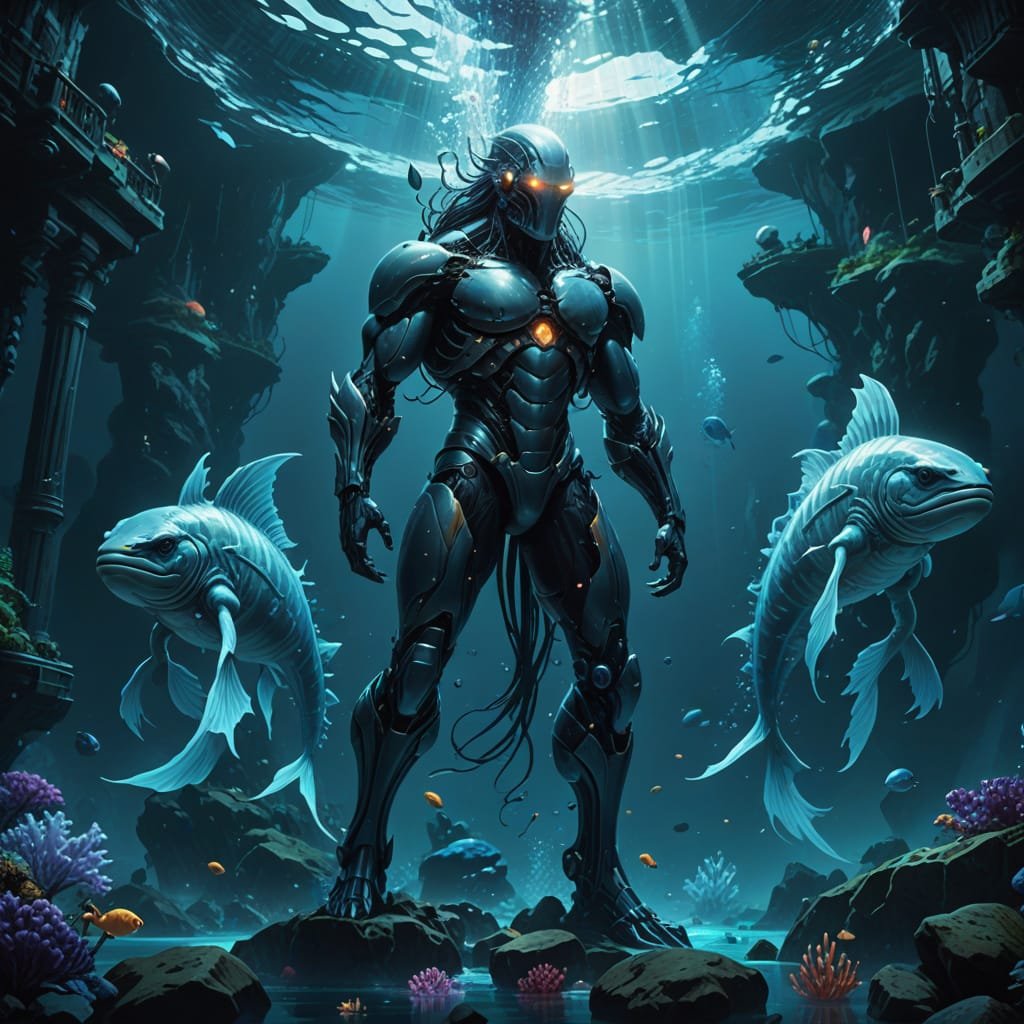
And so Atlanticus, mk. I, was born. An armored giant who could walk smoothly on land, possessed all the fighting techniques, and could also negotiate independently.