Echoes of Silent Worlds is a series of science-fiction graphic novels centered on the tragic story of Max, a father who has lost his daughter and stubbornly clings to the past in his attempt to bring her back. His search for a way to undo that loss brings him into conflict with The Continuum, a regime seeking to master time itself in pursuit of permanent power.
The story gains much of its depth and momentum from the other protagonists drawn into that conflict, each of them hunted by the same regime for very different reasons.
Max’s struggle is profoundly emotional, driven by love, grief and nostalgia. The Ghost, by contrast, is a droid whose strong sense of duty and moral conscience eventually turns him against his own makers.
Then there are the Aevori, whose conflict is rooted in existential hubris. Punished for attempting to attain immortality, they turned their resentment toward The Continuum.
Beneath the science-fiction narrative lies a philosophical framework inspired by the Buddhist concept of anattā — the absence of a permanent, fixed self — and Descartes’ cogito, ergo sum. Through a metafictional turn, the series also invites the reader to question some of their own assumptions about identity, memory and time.
What sets Echoes of Silent Worlds apart?
1. The metafictional twist — the author within the story
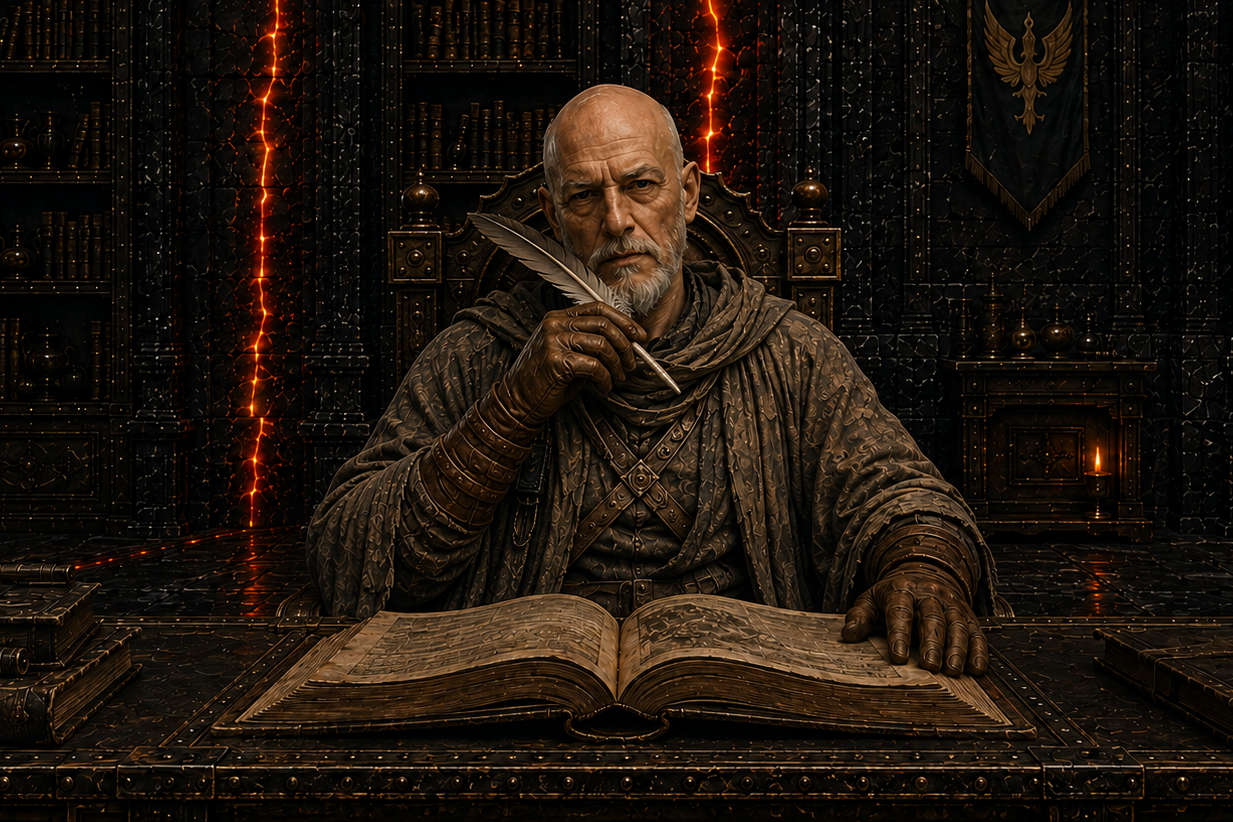
The author enters the fictional universe through the character of Fouquier and eventually confronts the protagonist himself.
Max is therefore not merely challenging another character. Without fully realizing it, he is confronting the rules of his own universe — and, ultimately, the one who created them.
2. Science as an emotional sledgehammer
Science is not used as a convenient escape route. Quite the opposite. One of the hardest constraints in physics — entropy — becomes an obstacle that emotion alone cannot overcome.
Max can fight a regime. He can challenge enemies. He can search for loopholes in time itself. But he cannot simply defeat the laws of thermodynamics.
That tension gives his struggle much of its tragedy and gradually pushes him toward a very different idea: not victory over loss, but acceptance of it.
3. The thematic layering of its protagonists
Max, The Ghost and the Aevori each embody a different response to existence.
Max represents emotion, memory and attachment.
The Ghost represents morality, duty and conscience.
The Aevori represent hubris, identity and the burden of history.
Their stories intersect with a regime built on control, permanence and certainty. The resulting conflict is therefore not only political or technological, but also philosophical: a struggle over memory, identity, mortality and the very meaning of time.
Echoes of Silent Worlds
On Existence, Loss, Identity — and the Refusal to Let Go.
About